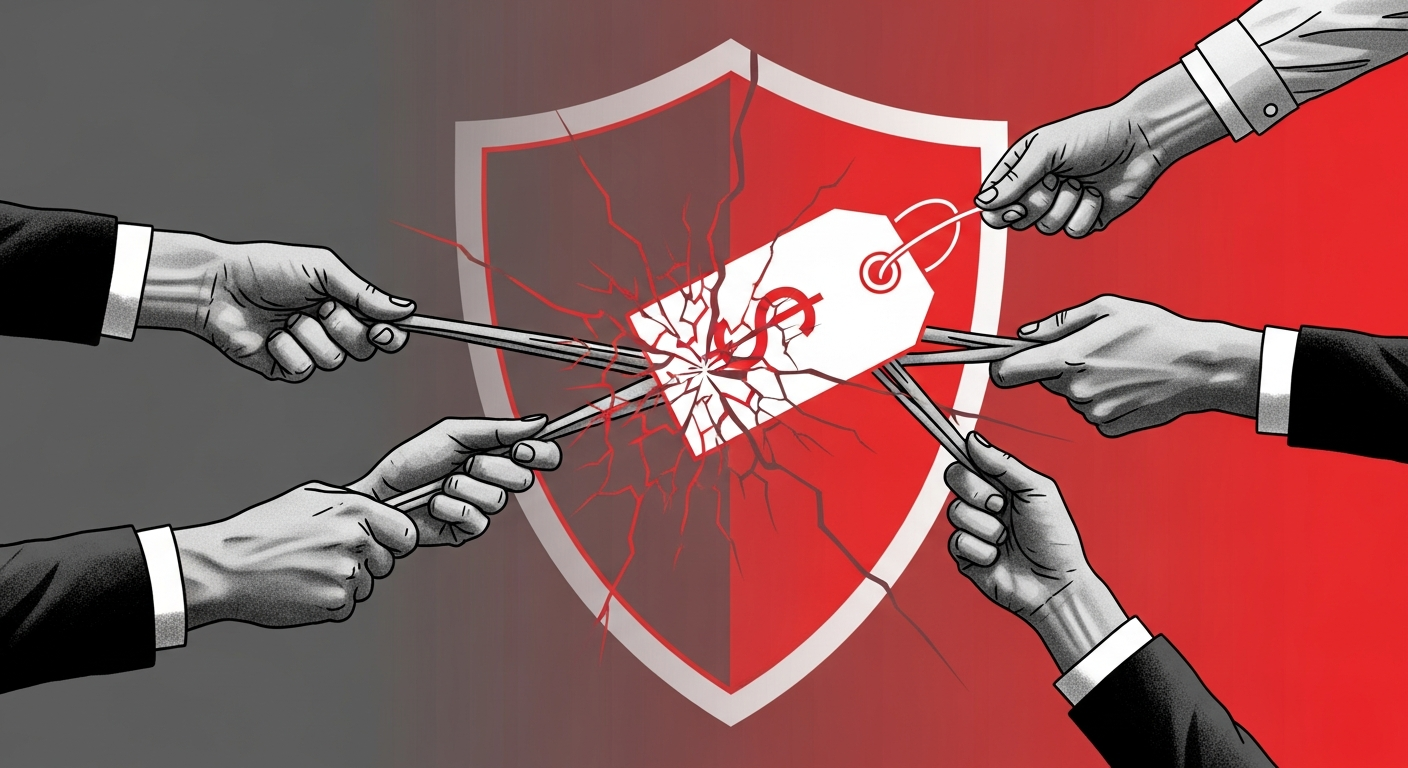
You probably think of your distributor as a partner. You might even call them that in meetings. But here's a question worth sitting with: when there's a conflict between your interests and someone else's, whose side are they on?
Follow the money and the answer becomes obvious.
First Priority: Themselves
Your distributor is a business, and businesses exist to generate returns for their owners. For the publicly traded ones, that means quarterly earnings, margin optimization, and shareholder expectations. For the private ones, it means wealth preservation and eventual exit value.
None of this is controversial. It's just worth naming because it frames everything else.
Your distributor's job is to extract as much margin as possible from the space between you and the retailer. They have fixed costs - warehouses, trucks, salespeople - and they need every transaction to carry its share of that overhead plus profit. Their entire business model depends on that extraction.
You are not their partner in this equation. You're one of the parties they're extracting from.
Second Priority: Their Biggest Accounts
When allocation gets tight - and it always gets tight eventually - who gets taken care of first?
The nationals and major regionals who move serious volume get priority. They get the phone calls. They get the dedicated reps. The 300-door FFL down the street gets whatever's left.
Think about what this means for you as a manufacturer. When a hot product launches and inventory is constrained, your product goes to the accounts that matter to the distributor, not necessarily the accounts that matter to you. Maybe you're trying to grow share in a particular region. Maybe you've been cultivating a relationship with an up-and-coming dealer who hand-sells your brand. Doesn't matter. Volume wins.
You think you're the customer. You're the commodity.
Third Priority: Whoever's Paying Spiffs This Month
Manufacturer incentive programs are supposed to drive sales of your products. In practice, they've become a tax you pay to avoid being actively ignored.
The distributor's sales team has a lot of options to put in front of dealers. Co-op dollars, promotional spiffs, and placement fees influence which options get mentioned first. If you're not playing that game, your products sit in the catalog while competitors who are paying get the mindshare.
You've probably experienced this yourself. Pull back on co-op spending and watch what happens to your order volume. The demand didn't disappear - the attention did. You were still in the catalog. Just not in the conversation.
That's the leverage dynamic in plain terms. You're paying for attention, not capability.
Fourth Priority: You
Somewhere on the list, eventually, is your brand. But the priorities above you shape every interaction.
When a dealer asks for a product that's out of stock, the distributor's reflex is to substitute - because they need to close the order. When inventory needs to be allocated, volume accounts come first - because that's where the money is. When sales reps decide what to push, spiff programs matter - because that's what their compensation structure rewards.
None of these decisions are about what's best for your brand. They're about what's best for the distributor's business.
And to be clear: that's not wrong. That's just what they are. A business optimizing for its own outcomes, exactly as you'd expect.
The Retailer is the Customer. You're the Supply.
Here's the mental model that clarifies everything: in the distributor's world, the retailer is the customer. The retailer is who they're trying to serve, satisfy, and retain. The retailer is who they're building loyalty with.
You're the supply side. You're one of hundreds of manufacturers feeding product into their system. You're fungible in a way that their major retail accounts are not.
This explains behaviors that otherwise seem frustrating or irrational. Why don't they share data with you? Because it's their competitive advantage, not yours. Why do they substitute your products? Because their customer relationship matters more than yours. Why do they prioritize accounts you don't care about? Because those accounts buy everything, not just your brand.
What Would It Look Like to Be First?
Imagine a world where the retailer was your customer - directly. Where every sale strengthened your relationship, not someone else's. Where you controlled allocation based on your strategy, not their volume tiers.
That's not a fantasy. It's a different model. One where the middle isn't taking a cut and dictating priorities.
Direct-to-retail infrastructure exists now. The question is whether you want to keep being fourth on someone else's priority list, or build something where your interests actually come first.
Oryx DTR was built for manufacturers who are tired of being supply. See what direct looks like.