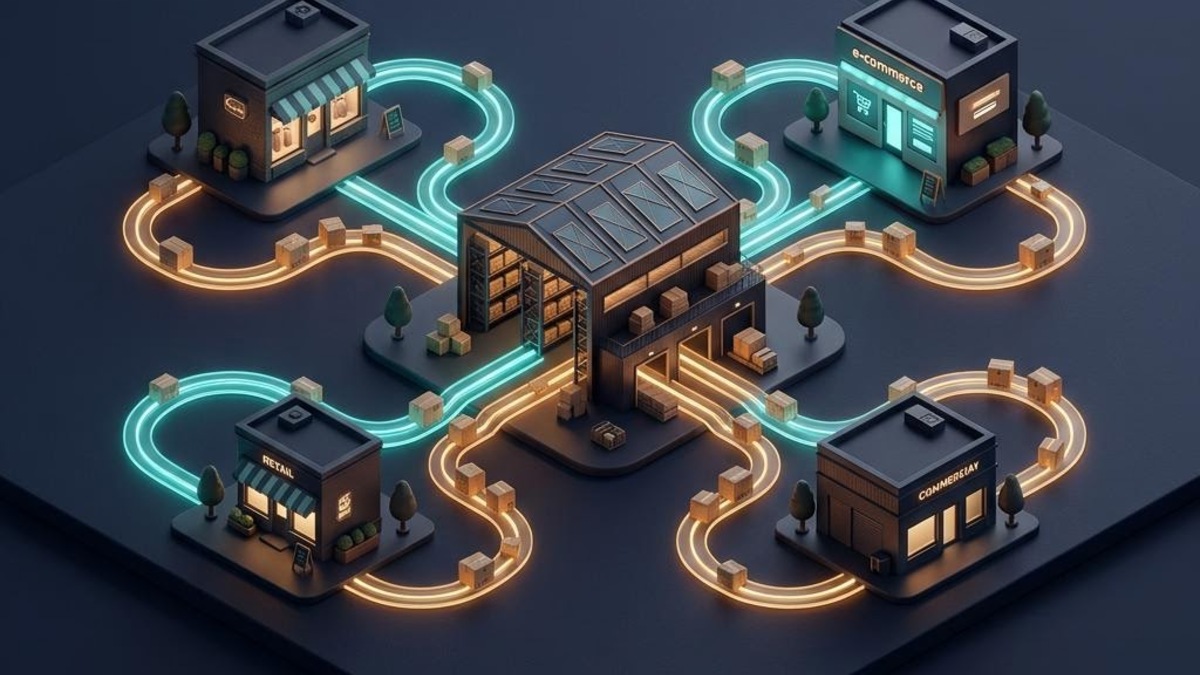
An independent dealer carries your brand and lists eleven of your SKUs online. You have ninety.
The interesting question is why, and the honest answer is that there are at least four reasons, only some of which anyone can fix with software.
Four reasons, not one
Price competition. Every additional listing is another item the dealer can lose a price fight on against Brownells, MidwayUSA, OpticsPlanet, and every marketplace seller. A small shop knows they will not win on the commodity items, so they do not list them.
MAP compression. Where a product is MAP-floored, the dealer has no lever to differentiate. Three thousand listings at the same price as everyone else is not a catalog, it is noise, and the dealer knows it.
Catalog bloat. Adding thousands of SKUs degrades their own site search and merchandising. A shop with a curated four hundred products has a better store than the same shop with four thousand it cannot organize.
Maintenance burden. Every listing is a record that has to stay accurate: price, availability, description, specs, images, compliance flags, status. Multiply by every brand they carry. Nobody is paying the dealer to do this, and the failure mode when they fall behind is not a stale page, it is a canceled order and an angry customer.
This piece is about the fourth one, and it is worth being precise about what that means. Removing the maintenance burden is a necessary condition for deep catalog representation, not a sufficient one. If price competition is the binding constraint at a given dealer, perfect syndication will not move their assortment. What syndication does is remove the constraint that applies to every dealer regardless of their competitive position, and that is a real but bounded claim.
I do not have survey data on which of these four dominates, and I have not seen anyone publish it. If you have dealer-side data on assortment decisions, it would be more useful than another vendor's opinion, including this one.
What the manual workflow actually looks like
The vendor emails a spreadsheet, or posts one to a dealer portal. The dealer downloads it. The columns do not match their platform's import format, so someone remaps them by hand or maintains a transformation sheet that breaks every time the vendor changes a header. Images live in a separate folder at inconsistent dimensions and naming conventions. Descriptions are marketing copy that has to be reformatted. MAP pricing lives in a different document than the wholesale price list.
Then it ships, and the file is immediately out of date.
Inventory moves daily. The spreadsheet was a snapshot. Unless the dealer re-imports on a schedule they have no real incentive to keep, every listing on their site is a claim about availability that was true at some point in the past.
Multiply that across a network. A hundred dealers doing this independently, at different intervals, with different error rates, against different platforms. This is what a fragmented channel looks like at the data layer: one source of truth at the vendor and a hundred divergent, decaying copies downstream.
The three failures this produces
Overselling. The most expensive one. A dealer's site shows a product in stock because their last import was Tuesday and the vendor sold out Wednesday. A customer buys it. Someone has to cancel, refund, apologize, and absorb the support cost. The dealer's rational response after this happens twice is to stop listing anything they cannot physically see on their own shelf.
Price and MAP drift. A vendor updates wholesale pricing or adjusts a MAP floor. Some dealers reflect it that week, some the following month, some never. The result is inconsistent pricing across your authorized network, which reads to the market as an undisciplined brand and reads to the dealers who did update as being punished for compliance.
Catalog decay. Discontinued SKUs stay listed for months. New product launches take weeks to appear, because adding them requires the dealer to notice, download, remap, and import. The launch window when demand is highest is exactly the window when your catalog is least accurately represented across your own network.
Each compounds with dealer count. Adding dealers does not just add revenue potential, it adds copies of your catalog that can be wrong in ways you cannot see.
What bi-directional means
Catalog syndication is not a new idea. Pushing a product feed to a partner has existed for a long time, in the form of scheduled CSV drops and FTP jobs. The distinction that matters is directionality.
Outbound, vendor to dealer storefront: product records, variants, wholesale and MAP pricing, descriptions and specs, media, category structure, availability, and lifecycle status. When any of these change at the source, the change propagates. The dealer does nothing.
Inbound, dealer storefront to vendor: orders as they are placed, fulfillment status, tracking, cancellations and returns, and the sell-through record that comes with all of it. The order arrives as structured data, not as an email to be rekeyed.
The second direction is what separates syndication from a feed. A one-way feed keeps listings current. A bi-directional connection makes the dealer's storefront a node on the vendor's order system, which is what makes hands-off dropship possible at all. Without the return path, someone is manually moving orders between systems and the throughput ceiling is set by how many orders a person can process.
Fan-out is the propagation model: one update at the vendor, applied across every authorized storefront connected to that catalog, rather than a file each dealer pulls on their own schedule.
What real-time sync does not fix
Here is where syndication vendors, including this one, tend to overclaim.
Real-time sync does not eliminate overselling. It shrinks the exposure window from days to seconds. It does not close it, because two dealers can sell the last unit inside the same second, and no propagation speed solves a concurrency problem.
Closing the remaining gap requires logic at the vendor, not faster messaging: reservation of inventory at order placement rather than at fulfillment, an explicitly published oversell tolerance so dealers know the rules, and defined backorder handling for when it happens anyway. Any platform pitching you real-time sync without an answer on reservation semantics is selling you a smaller window and calling it a guarantee.
Ask the question directly when you evaluate anyone, including us: what happens when two dealers order the last unit simultaneously, and who eats it.
The platform problem
Dealers are not on one platform. They are on Shopify, WooCommerce, BigCommerce, and Magento, with a tail of custom builds and older systems. Each has a different data model for products and variants, a different API surface, different rate limits, and different rules about inventory across locations. A vendor solving this alone is not building one integration. They are building four and maintaining four against four independent release cycles.
That work has to be absorbed by infrastructure between the vendor and the dealer network, exposing one consistent catalog model upstream and translating it per platform downstream. This is the part manufacturers consistently underestimate when they consider building dealer syndication in-house. The catalog logic is straightforward. The platform matrix never stops needing maintenance.
The category already exists
The choice is not spreadsheets versus building it yourself. There is a mature, well capitalized third option, and any vendor evaluating this should know it.
Logicbroker markets connect-once, scale-everywhere dropship and marketplace infrastructure, with automated supplier onboarding, product content syndication, and order routing. Rithum, formed in December 2023 when CommerceHub rebranded and absorbed ChannelAdvisor and Dsco, reported at the time that more than 40,000 companies transact over $50 billion in annual GMV across its network. These are not aspirational competitors. They are functioning infrastructure with real scale, and their marketing language overlaps heavily with the paragraphs above.
So the honest positioning question is not whether syndication infrastructure exists. It is whether the existing infrastructure fits this channel. Two differences matter.
Direction. These platforms are predominantly retailer-led. A large retailer runs a dropship or marketplace program and onboards suppliers into it. The gravity runs toward the retailer: the retailer defines the program, the requirements, and the terms, and the supplier connects in order to be carried. That is a good model for getting a brand onto a national chain's site.
It is not the same problem as a manufacturer pushing its catalog out to two hundred independent dealers who each run their own storefront and each decide their own assortment. That is brand-led syndication, and the party being served is the small dealer, not the large retailer. Nothing prevents a general platform from doing it. The economics of who they sell to means they mostly do not.
Vertical. Which brings up the part a generalist cannot copy without deciding to enter this industry.
Serialized product changes the requirements
For firearms, a dropship order is not a shipping decision. It is a regulated transfer, and the routing has to be part of the transaction rather than a check someone performs afterward.
A serialized item ordered from a dealer's storefront ships to a licensed entity. That license has to be valid at the time of shipment, the routing has to be correct, and the record has to hold up. ATF has been tightening here, not loosening: a Direct Final Rule published May 6, 2026 (RIN 1140-AA61) amended 27 CFR Part 478 to let a transferring FFL verify a transferee's license through eZ Check instead of a certified copy, effective August 4, 2026, and simultaneously removed the 45-day grace period that had allowed transfers against an expired license on a multi-licensed organization's certified list.
Layer on state-level restrictions that vary by product and destination, MAP obligations, and the fact that a dealer's storefront may be selling an item that will transfer through a third FFL entirely.
A general dropship platform can route an order. It cannot validate a transfer it does not model. The choice for a manufacturer in this industry is between infrastructure where compliance is part of the order object and infrastructure where compliance is a process the dealer is trusted to run correctly on the side.
What this actually does for dropship volume
The title of this piece makes a causal claim, so it should be stated at the size the evidence supports. What follows is a mechanism, not a measured result. I do not have pilot data, and neither does anyone else pitching you on this.
It lowers the listing cost, substantially. Not to zero. The dealer still owns customer service, returns, and any ad spend on a product they have never physically handled, and for serialized dropship their economics are thinner still because the receiving FFL does the transfer work. What goes away is the data maintenance, which is the part that scales with catalog size. That is why it changes assortment depth specifically: the long tail that never justified manual entry becomes cheap enough to carry.
It makes accuracy a property of the system rather than of the dealer's diligence. A dealer who trusts availability on their site will list products they do not stock. One who does not trust it will not, at any margin.
It makes small orders economical. If an inbound dropship order requires the dealer to email the vendor and the vendor to rekey it, both sides carry a per-order cost that makes single-unit orders not worth processing. Automated routing is what makes the volume base of independent retail addressable.
It compresses launch cycles. A new SKU can be live across the network on release day instead of appearing gradually over the following month.
The underlying point
Fragmentation in B2B distribution is usually discussed as a commercial problem: too many tiers, too much margin extracted, too little control over how product reaches the market.
It is also a data problem, and the data problem is more tractable. Your catalog exists in one authoritative form. Every copy living downstream in a dealer's storefront is either synchronized with that source or drifting from it. Every hour of drift is a listing that might be wrong, a customer experience that might break, and a dealer becoming slightly less willing to carry your line online.
Defragmenting the channel starts with there being only one version of the truth, and with it propagating without anyone having to remember to update a spreadsheet.
Oryx builds bi-directional catalog syndication and dropship routing between firearms and outdoor manufacturers and their authorized dealer networks, with FFL validation and transfer routing modeled into the order rather than bolted onto it. If you want to know how we handle inventory reservation, ask us that first.